UKABCS Digital Campus Transformation Grant

1. Call at a Glance
Applications must be submitted only through the official route. No work or expenditure may begin before executed documents and written start authorisation.
2. Why This Grant Exists
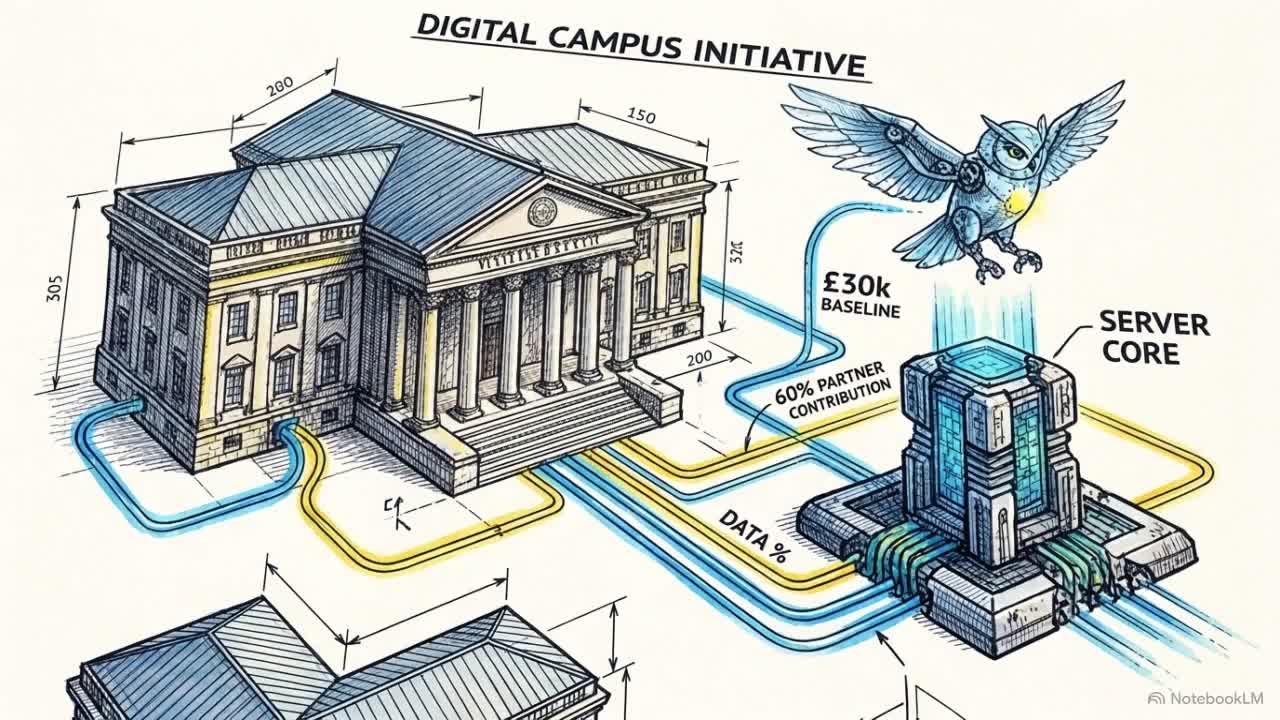
Digital transformation is no longer achieved by uploading lecture files or purchasing a software licence. When courses, assignments, examinations, attendance and communications are spread across disconnected tools, students lack a clear learning journey, academic staff repeat administrative work and leaders have limited visibility of quality and delivery. This grant helps a faculty establish one governed digital-learning ecosystem. It combines institutional design, LMS build and configuration, complete digital preparation of academic content, visual and video production, assessment and course automation, hosting and security, staff development, student onboarding, responsible AI, pilot delivery, launch, handover and sustainability. The intended result is not merely a website. The faculty should receive an operational platform, configured courses, approved digital content, trained teams, operating documentation and a realistic plan for continued service.
3. What Is an LMS?
A Learning Management System (LMS) is the digital environment that brings teaching and learning administration together. It can organise faculties, departments, programmes, terms and courses; manage users and permissions; publish lessons, files and videos; collect assignments; run quizzes and examinations; manage attendance and announcements; provide feedback; and generate authorised reports. Students can see their enrolled courses, deadlines, activities and permitted results. Academic staff can manage teaching and assessment from one location. Administrators and quality teams can monitor approved information and workflows. A well-designed LMS reflects the university's academic rules and governance rather than forcing the institution into a generic template.
4. Why This Matters for Universities
Universities face changing student expectations, wider use of blended learning, rapid AI development, demand for professional and continuing education, and stronger expectations around data, accessibility and service continuity. A governed LMS enables the university to respond more consistently, deliver approved online and blended activities, develop summer and professional programmes, improve access to content and use evidence for improvement. The programme therefore treats digital learning as future academic infrastructure, not a temporary technical project. Institutional ownership, staff capability, secure data and supplier exit are central.
5. Programme Objectives
Build and configure an LMS for each participating faculty. Prepare approved academic material as complete, usable digital courses. Produce agreed visual designs, recordings, edited videos and course introductions. Automate assignments, quizzes, examinations, attendance and communications where authorised. Support approved training, workshops, conferences, summer courses and payment-enabled activities. Train administrators, academics, quality teams, technical teams and students. Integrate Ebonics as an optional voice tutor and AI assistant. Provide hosting, security, backup and time-limited support. Transfer documentation and operational ownership to the university.
6. Route One: Industrial Companies
An industrial company may apply to become an award-holding allocation and coordination partner. A successful company may nominate up to five universities. It must identify a qualified implementing company, or present an acceptable competitive method for appointing one, and demonstrate that it can maintain separate records and quality controls across its portfolio. The industrial company receives £2,000 per approved faculty from the UKABCS share for evidenced university engagement, coordination and reporting. It cannot make the final grant decision, promise funding before UKABCS approval, collect the UKABCS contribution, or impose undisclosed services or fees.
7. Route Two: Direct University Applications
An authorised university may apply directly for one or more faculties. It appoints a Principal Investigator (PI) for each faculty. UKABCS appoints or provides a qualified implementing company. The PI receives £2,000 per faculty from the UKABCS share, subject to approved milestones and legal, tax and conflict-of-interest arrangements.
8. Who May Apply?
Industrial applicants must be legally registered companies able to contract, invoice and coordinate university delivery in Egypt. University applicants may include officially recognised public, national, private and non-profit higher-education institutions in Egypt, subject to final legal eligibility rules. A faculty must have formal university authority. Individuals, students and individual academic staff may not apply independently.
9. Minimum Industrial Company Requirements
The company should demonstrate lawful status and authority, relevant institutional or technology experience, an ethical university-engagement plan, a qualified implementing company or procurement route, portfolio capacity, conflict and anti-bribery controls, secure records, transparent financial understanding and willingness to accept monitoring and audit.
10. Minimum University Requirements
The university should provide senior sponsorship, an authorised project owner, one PI per faculty, academic and technical leadership, quality and data/legal contacts, a finance or procurement contact, approved academic content and rights, staff time, participation in filming and training, £12,000 per faculty and a post-grant operating plan.
11. What the Faculty Receives
11.1 Readiness and Design
The delivery team examines academic structures, current processes, content, systems, users, infrastructure, data and risks. It then produces a baseline, target operating model, roles, course architecture, quality approach and implementation plan.
11.2 LMS Build and Configuration
The work may include faculty and department structures, programmes, terms, courses, user roles, enrolment, course templates, assignments, quizzes, examinations, attendance, announcements, feedback and reporting. Every important workflow is tested before launch.
11.3 Digital Academic Content Production
The university supplies approved academic material and lawful rights. The implementing team structures it into lessons and activities, formats and uploads resources, connects assessments, adds metadata, checks presentation across devices and delivers complete configured courses for academic approval.
11.4 Filming and Visual Production
The approved plan may include course visual identity, presentations, illustrations, infographics, filming, audio and video editing, captions, lecturer introductions and course trailers. Quantities, lengths, quality and approval responsibilities are defined in the faculty scope.
11.5 Hosting, Security and Backup
The approved period may cover hosting, servers, basic licences, secure connections, monitoring, role-based access, backup, recovery planning and security updates. Data location, capacity, duration and post-grant responsibility require technical and legal approval.
11.6 Ebonics: Optional Voice Tutor and AI Assistant
Ebonics is designed to stay close to the student during study. A student may speak or type to request an explanation, simplify a difficult idea, review permitted course material, ask follow-up questions, analyse an educational image or organise a study session. Within approved permissions, it may use course, book or user-provided document context and respond by text or voice. Academic staff may use Ebonics to support explanations or draft practice questions that remain subject to their review. Administrators may receive simple guidance on permitted platform procedures. Ebonics can make errors, does not replace academic staff, cannot make final assessment or disciplinary decisions and must not disclose content outside the user's permission. There is no subscription charge for the LMS or ordinary enrolled courses. Ebonics is entirely optional. It costs £2 per month for each student user during the first six months. After that period, a discounted university-student price will be based on LLM usage and disclosed before subscription or renewal. Non-subscription never restricts ordinary course access.
11.7 Smart Reading Tools
Approved tools such as GetDocsTalk may help students and researchers ask page-linked questions about PDFs, save notes and tasks, listen to explanations and work through research papers. Seats, usage capacity, duration and data policy must be approved.
11.8 Training, Pilot and Handover
Training is role-based and competence is demonstrated through practical tasks, not attendance alone. A controlled pilot tests real users and workflows before launch. The university then receives administration rights, documentation, knowledge transfer, a sustainability plan and time-limited support.
12. Academic and Administrative Automation
The LMS may automate assignment opening and closing, submission confirmation, reminders, quiz attempts, authorised examination rules, enrolment, attendance, completion and reporting. Human academic authority and contingency procedures remain mandatory. The university may also configure summer courses, professional programmes, workshops and conferences. A participant can select an approved activity, register, pay through an authorised gateway and receive automatic access after confirmed payment. Pricing, refunds, tax, consumer protection and payment security remain under university authority and applicable law.
13. Reference Budget per Faculty
Budget line | Total | UKABCS | University |
Coordination | £2,000 | £2,000 | £0 |
Readiness, governance and design | £2,000 | £1,200 | £800 |
LMS engineering and configuration | £7,000 | £4,000 | £3,000 |
Hosting, licences, security and backup | £4,000 | £4,000 | £0 |
Digital academic content production | £6,000 | £2,500 | £3,500 |
Filming, design and editing | £3,000 | £1,000 | £2,000 |
Ebonics and smart-reading integration | £2,500 | £2,000 | £500 |
Training, change and pilot | £1,500 | £600 | £900 |
Quality, accessibility and acceptance | £1,000 | £400 | £600 |
Launch, handover and limited support | £1,000 | £300 | £700 |
Total | £30,000 | £18,000 | £12,000 |
The integration budget does not purchase unlimited LLM usage. Internal reallocation requires approval and must preserve the total, funding split and core outputs.
14. Payment Transparency
UKABCS pays its share directly to implementing companies, suppliers and approved coordination recipients. The university pays its share directly to the implementing company under contract and invoice. The university pays nothing to UKABCS. No unrestricted cash grant is transferred to the university or industrial company. Payments require evidence, milestones and acceptance.
15. What Is Not Automatically Included
The grant does not automatically include unlimited content or videos, full academic authorship, devices, network replacement, building works, perpetual hosting or support, unlimited AI usage, unapproved integrations, accreditation, guaranteed enrolment, income, savings or academic outcomes.
16. Student Charging Principles
Ordinary platform and course access carries no separate student subscription. Ebonics is optional at the published price. Paid summer or professional activities are separate, university-authorised services. Charges must be transparent, and optional AI non-subscription may not restrict an ordinary course.
17. Application Process
Applicants select the correct route, confirm authority, answer the application questions, attach the limited required files and submit through the official channel. Applications undergo completeness and eligibility screening, independent merit assessment, moderation, due diligence, permitted clarification and a final Grant Decision Committee decision. No applicant should incur grant-related costs before written authorisation.
18. Assessment Criteria
Industrial applications are assessed for experience, ethical university engagement, implementing-company quality, portfolio governance, financial transparency, data/security, value, risk and sustainability. University applications are assessed for evidenced need, leadership, readiness, faculty scope, content and filming readiness, technology and data, adoption, accessibility, ability to contribute £12,000 per faculty, sustainability, value and risk. Final weights and thresholds [DECISION REQUIRED].
19. Strong Applications
A strong application is specific and evidenced. It identifies decision-makers and delivery owners, proposes a manageable scope, demonstrates content and staff availability, understands payment flows, declares conflicts, protects students and data and explains post-grant operation. It also shows how the LMS will function in daily practice and how ordinary free course access will remain separate from optional Ebonics services.
20. Due Diligence and Decisions
Due diligence verifies legal authority, finances, contribution, procurement, technical readiness, content rights, staffing, data, security, conflicts and sustainability. Possible decisions include approval, conditional approval, reserve, deferment, rejection or future resubmission. A high merit score does not override material due-diligence failure.
21. Required Industrial Company Documents
Submit the application plus only three attachments: Governance, coordination, reporting and quality plan. Data, security, conflicts and procurement plan. Relevant experience and verified evidence file.
22. Required University Documents
Submit the application plus only five attachments: Institutional support letter. Faculty/faculties and PI details. Need, baseline and current-systems description. Initial course/content and rights inventory. £12,000-per-faculty commitment and procurement plan.
23. Data, AI and Accessibility
University data and content remain institutionally controlled. Processing agreements must define access, retention, backup, incidents, subprocessors and exit. Ebonics requires human oversight, error reporting and permission controls. Accessibility is assessed across platform, content, media and training.
24. Conflicts and Integrity
Applicants must disclose ownership, related parties, supplier interests, prior advisory roles and financial relationships. A party may not assess an application from which it may benefit. False evidence, hidden conflicts, double funding, bribery, hidden fees, data misuse or UKRI misrepresentation may lead to rejection, suspension or termination.
26. Important Conditions
Application and eligibility do not guarantee an award. Each faculty is a separate £30,000 funding unit. One faculty is the minimum; three is a preference. The scope may be conditioned or reduced. Only executed award documents create final obligations.
27. UKRI Disclaimer
“This programme has been designed with reference to relevant UKRI principles and publicly available good-practice guidance. It is independently administered by UKABCS and is not funded, endorsed, accredited or administered by UKRI.”
Submit Her : UKABCS Industrial Company Grant Application
Submit Her : UKABCS Digital Campus University Transformation Grant Registration